

Timing and serpentine belts do not get much credit. They do not make noise when they are working properly. They do not show off. But they quietly run half the engine’s essential systems, and when one of them gives up, everything gets interesting very quickly.
If you are driving around Belleville, MI, these are the kinds of parts you want to understand before they decide to introduce themselves the hard way.
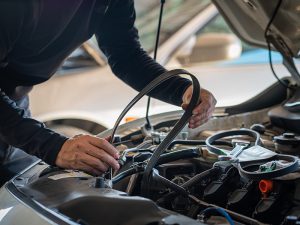
What Are Serpentine Belts and Timing Belts?
The serpentine belt is the overachiever. One long belt, routed around multiple pulleys, handling several jobs at once. It powers the alternator, power steering pump, air conditioning compressor, and sometimes even the water pump.
It is called serpentine because it winds its way through the engine bay like it owns the place. And to be fair, it kind of does.
The timing belt is more serious. It sits deeper in the engine and keeps everything in sync. It coordinates the crankshaft and camshaft so valves open and close exactly when they should. No guesswork. No margin for error.
Get that timing wrong, and the engine does not just complain. It can do real damage.
Maintenance Needs for Serpentine Belts and Timing Belts
The serpentine belt is fairly easy to monitor. It is visible, accessible, and usually gives you a few hints before it fails. Most shops will check it during routine service, often around every 10,000 miles.
Look for cracks, fraying, or a shiny glazed surface. If it starts squealing, that is not personality. That is a warning. Most last somewhere between 50,000 and 100,000 miles, depending on conditions.
The timing belt is less talkative. It does not usually show obvious wear before it fails. That is why manufacturers set replacement intervals, often between 60,000 and 100,000 miles.
Skip that interval, and you are taking a gamble the engine is not designed to perform.
How to Tell If You Need to Service Your Belts
A worn serpentine belt tends to make itself known. You may hear squealing on startup or notice systems acting strangely. Weak power steering, inconsistent air conditioning, or charging issues can all trace back to that belt.
Timing belts are more subtle. Rough idling, misfires, or difficulty starting can point to a problem, but often the first real sign is failure. That is why staying ahead of the schedule matters more than trying to diagnose it after the fact.
Why Regular Belt Maintenance Matters
When a serpentine belt fails, multiple systems stop working at once. You can lose power steering, charging, and cooling in a single moment. It turns a normal drive into a situation you did not plan for.
A timing belt failure is more serious. In many engines, it can lead to internal damage where valves and pistons collide. That is not a repair you brush off. That is a repair you avoid by staying on schedule.
Belts are simple in concept but critical in function. Keep them in good condition, and the rest of the engine has a much easier life.
At Atchinson Ford, technicians check belt condition, follow manufacturer service intervals, and replace components before they become problems. It is a straightforward approach that keeps your vehicle running the way it was designed to, without any unpleasant surprises.
Connect with us


- 2024 Ford F-150
- 2025 Ford F-150s
- 2025 Ford Models
- 2026
- 2026 Ford Bronco
- 2026 Ford F-150
- 2026 Ford Maverick
- 2026 Mach-E
- 2026 Ranger
- Atchinson Ford
- Atchinson Ford Service
- Belleville Ford Dealer
- Belleville Ford Service
- Belleville Used Cars
- Community Events
- Cooling System
- Finance
- Ford Bronco
- Ford Escape
- Ford Explorer models
- Ford F-150
- Ford Inventory
- Ford Models 2024
- Ford Service Center
- Ford Services
- Ford Suv
- Ford Technology
- Ford Tire Services
- Ford Towing
- Ford Trucks
- FordPass
- Fuel Efficiency
- Green
- New Ford
- New Ford Escape
- New Ford Inventory
- New Ford Models
- New Ford SUVs
- New Inventory
- Parts
- People
- Pre-Owned Inventory
- Radiator
- Rental
- Service
- Suspension
- Technology
- Transmission
- Uncategorized
- USA Today Automotive Insights Team
- Used Ford Models
- Used Vehicles
- Winter Maintenance